“Renewable energy is not truly ‘green’ unless efforts have been made to limit negative repercussions for biodiversity.” – BirdLife International
This principle was front and centre at the Australasian Ornithological Conference (AOC) in Boorloo/Perth in November, where BirdLife International officially launched AVISTEP in Australia. Our ecologist, Vilda, attended both the conference and the pre-launch AVISTEP workshop, which provided detailed insights into the tool and its potential applications for planners, developers, and consultants.
In this blog, we’ll cover what AVISTEP is, why it’s important, and how we can integrate it into our practices to support clients and nature-positive energy planning.
What is AVISTEP?
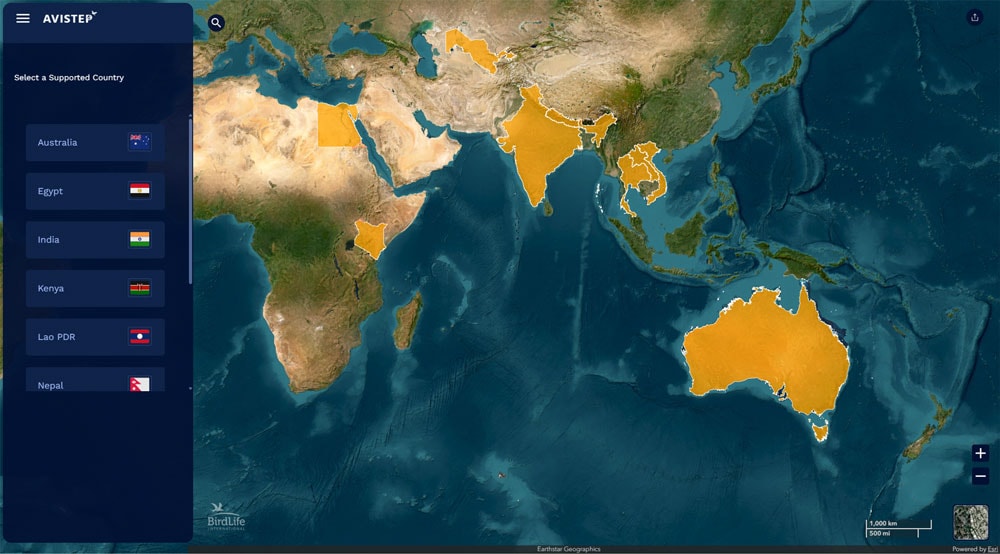
AVISTEP (Avian Sensitivity Tool for Energy Planning) is a web-based mapping platform that helps identify areas sensitive to birds in relation to renewable energy infrastructure such as onshore and offshore wind farms, solar PV arrays, and transmission lines. It provides planners and developers with spatial insights to guide site selection and minimise biodiversity impacts.
The tool integrates multiple data layers to calculate avian sensitivity scores for 5 × 5 km grid cells, including:
Species Distribution Data:
- Global and national datasets such as IUCN Red List species ranges, Important Bird Areas (IBAs), and Key Biodiversity Areas (KBAs)
- eBird occurrence records and other citizen science data for finer-scale insights
Species Attributes:
- Conservation status (e.g., threatened species categories)
- Vulnerability to specific infrastructure types (e.g., collision risk for wind turbines or power lines)
- Habitat preferences and migratory behaviour
Environmental Layers:
- Land cover and habitat types from satellite imagery
- Elevation and topography for wind suitability and bird flight patterns
- Coastal and marine zones for offshore wind sensitivity
Infrastructure Context:
- Sensitivity scoring tailored to different technologies – wind (onshore/offshore), solar PV, and overhead power lines
The platform uses these inputs to generate interactive heatmaps showing relative sensitivity across regions. Users can zoom into specific areas, review species lists, and download reports to inform early-stage planning and environmental assessments.

Why is AVISTEP Important?
Climate change is no longer a distant challenge; it is a reality unfolding before us. One of the most urgent actions to address this crisis is the rapid transition from fossil fuels to renewable energy. Over the coming decades, millions of square kilometres worldwide will be dedicated to renewable energy development, along with a near doubling of global power line infrastructure.
While this transition is essential, it coincides with another critical emergency – biodiversity loss. These two crises are deeply interconnected and must be tackled together. Poorly sited renewable energy projects can lead to habitat destruction, disrupt migratory pathways, and increase collision risks for birds. Research shows that if developments were placed solely to maximise energy output, millions of hectares of natural habitat could be lost globally, threatening hundreds of species. Alarmingly, this habitat loss could release an estimated 415 million tonnes of stored carbon, undermining the very climate benefits renewable energy aims to deliver.
As Australia accelerates toward its renewable energy targets, avoiding biodiversity conflicts is crucial. AVISTEP provides a proactive solution to this, by:
- Identifying high-risk areas early in the planning process
- Reducing environmental impact while supporting clean energy goals
- Building confidence with regulators and stakeholders through transparent, science-based assessments
How Can It Help Our Clients?
For developers, planners, and consultants, AVISTEP offers practical benefits:
- Proactive planning – avoid costly redesigns by selecting low-sensitivity sites from the start
- Regulatory compliance – support EPBC Act requirements and biodiversity offset strategies
- Risk mitigation – minimise collision risks for species such as raptors and migratory birds
- Stakeholder engagement – demonstrate commitment to sustainable development


Looking Ahead
The launch of AVISTEP in Australia marks a significant step toward nature-positive energy planning. At 4 Elements Consulting, we are excited to integrate AVISTEP into our workflows and help clients make informed, responsible decisions that protect biodiversity while advancing renewable energy.
If you’d like to learn more about AVISTEP or how we can assist with bird-sensitive planning for your projects, contact our team today.
Contact Us