Category

Past Projects

Tumuruu BESS and Solar Farm gets EPBC Approval!

By Past Projects, Recent News

A Major Milestone for Renewable Energy in South East Queensland

We’re thrilled to share that an exciting new solar project is taking flight in South East Queensland. The Tumuruu BESS and Solar Farm is in the South Burnett region and is a project designed by Australian Solar Enterprises (ASE) to assist in Queensland’s transition to a significantly decarbonised energy grid. The more solar projects like this that get up-and-running, and the more grid feed-in we generate from clean renewables, the greater reliability we have in providing the majority of our State’s energy needs without costing the Earth. It’s all about diversifying and strengthening the grid!

The most exciting thing about this project is the amount of commitment and iterative design effort that was put into avoiding impacts to existing natural values at the project site. This involved the engagement of Four Elements Consulting (4 Elements) to help ASE complete a significant impact referral pursuant to the highest level of environmental legislation in Australia – the Federal Government’s Environment Protection and Biodiversity Conservation Act 1999 (EPBC Act). After nearly two (2) years of work, the EPBC Act approval was signed by the Minister for the Environment’s delegate under Section 75, on 1 May 2026. The project was deemed a ‘not controlled action’ by the delegate and therefore can proceed with respect to the environmental considerations outlined by 4 Elements.

 Project Overview: Tumuruu BESS and Solar Farm at a Glance

Australian Solar Enterprises (ASE) has designed Tumuruu BESS and Solar Farm as one of its premier renewable energy projects. The project has been planned, designed and managed by ASE, and will now begin a period of tendering, discussion and State planning to fine-tune its layout, construction and long-term management. Essentially, the project will consist of:

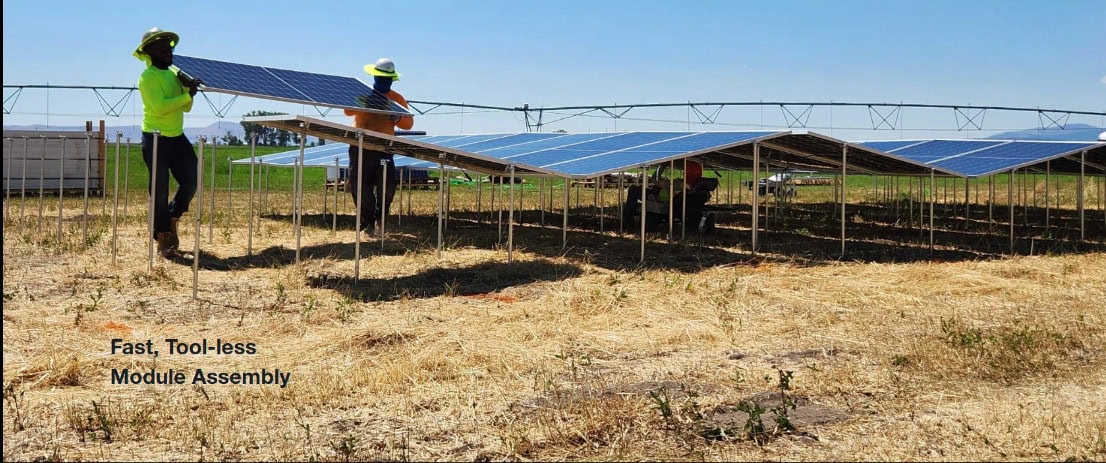
  • A 400 MW photovoltaic (PV) cell solar farm comprised of fixed-tilt PV panels mounted on lightweight steel rods and plates at about 1.2 m clearance from the ground and with consistent mixed pasture and native groundcover underneath. The system is self-stabilising and does not require concrete foundations or permanent footings, meaning the project avoids concrete use and minimises ground disturbance. It also means panel infrastructure is easily removable too.
  • A 2,000 MWh centralised Battery Energy Storage System (BESS) in shipping container sized units.
  • The fixed-tilt PV system has no moving tracking mechanisms. Monitoring is conducted remotely via SCADA systems. There is no requirement for permanent on-site staff during standard operations.
  • The site will need no night-time artificial lighting, will emit no noise or vibrations except for a very low-level hum from the BESS, and will need only monthly routine maintenance visits, cleaning and vehicular access.
  • The project is intended to operate initially for more than 30 years, with likely re-energisation to a total of 50 years of operations, and its total impact area is just 265 ha within a 672-ha property. The remaining 407 ha are comprised of retained high-value regrowth vegetation mapped by the Queensland Herbarium.

Examples of freshwater-dams retained with high-value regrowth being avoided by the project

Aerial of project areas to the west showing retained high-value regrowth being avoided.

4 Elements Consulting: Guiding the EPBC Act Approval Process

The Queensland-based environmental consultancy, 4 Elements, was paramount in guiding the design and development of the project. It was important to note that the area sits within the South East Queensland conservation strategy area for koala (Phascolarctos cinereus); one of the country’s most iconic endangered species. Four Elements worked with the team at ASE to partition the property into areas that would become part of the project’s footprint (265 ha) and areas that would remain important habitat and dispersal corridors for koala (407 ha). These areas included high-value regrowth dominated by pink bloodwood (Corymbia intermedia), silver-leaved ironbark (Eucalyptus melanophloia), forest red gum (E. tereticornis) and gum-topped box (E. moluccana) – all important habitat and food trees for koala. To assist in maintaining connectivity for koala to move at the project site, all mapped waterways are being buffered by 20 m and restored through the maintenance and removal of lantana (Lantana camara) and other ecosystem-changing weeds to allow for native recruitment over time. Moreover, as the solar panels sit 1.2 m above-ground and form a continuous “canopy” they may improve koala mobility throughout the otherwise highly exposed open pasturelands too.

Additional to koala, the project also sought to address potential impacts to grey-headed flying-foxes (Pteropus poliocephalus), a vulnerable-listed species that is declining across much of its eastern Australian range. The large fruit-bat requires mature nectar trees to forage for nutrients and to roost in. The project has retained all of the high-value regrowth throughout the project, all waterways with their 20 m buffers and will enact a Vegetation Management Plan (VMP) that will plant additional nectar-providing plants such as forest red gum (E. tereticornis) and mixed native grevillea and banksia species. The project has done its utmost to allow for the continued, and even improved use of the property, by some of the most imperilled species in the area.

Four Elements was engaged for EPBC Act services and delivered their support of the project in the form of an overarching Environmental Impact Assessment (EIA); a service the company is renowned for across Queensland.

”From day one, the design philosophy for Tumuruu was that good engineering and good environmental outcomes aren't a trade-off — they're the same problem. The 4 Elements team helped us hold that line. Together we shaped a layout that worked with the site's topography, retained the high-value regrowth that matters most for koala and grey-headed flying-fox, and still delivered a project that will generate at scale. That's a much harder design exercise than the alternative, but it's the only one worth doing.

Chris ElderCEO & Co-Founder | Australian Solar Enterprises

Example of the open, low-quality paddock used for the solar infrastructure

Why is EPBC Act referral important?

For any future renewable energy project in Queensland or the Northern Territory, it is key to embark on environmental considerations early in the process of planning and building the project’s investment portfolio and scope of works. This is because the environment is a complex and dynamic system that is legislated not just to protect its structural and compositional components, but also its function over time. This means that one set of plans and process may not apply across all project sites, and so tailored, spatial and temporal plans must be developed specifically for each project in consideration of the key values and constraints of the property. For Tumuruu BESS and Solar Farm, this included measuring, mapping and setting frameworks for avoidance of impacts to waterways, high-value regrowth vegetation, threatened species and important koala dispersal habitat.

Koala dispersal habitat is considered by the Federal Government’s conservation advice for the species as “any and all habitats that facilitate movement of koala between larger, more suitable habitat patches used for breeding, shelter and forage”. By definition, this means that most farmland and non-urbanised or sealed land-uses within the range of koala is technically dispersal habitat. As such, the team had to work on this species for a longer period of time to more properly understand how the species may use dispersal habitat (open paddocks) at the project site, assess this against the Federal Government Significant Impact guidelines, and develop strategies to avoid an impact that was unacceptable by the Minister and their delegate.

These iterative processes, on-site fieldwork, desktop research and submissions, all take time and thought, and so our main advice for any other proponents wishing to embark on the development of a renewable energy project, is get in early! Bear in mind also, the EPBC Act was reformed in December 2025, and changes are slowly trickling into effect which may require further thought and consideration over the old system of works.

By implementing an early approach to environmental constraints assessment and submission to the Federal Government, businesses and land managers can identify improvement opportunities and make more informed, impactful decisions on their projects. Four Elements is happy to help support anyone on this journey, at any time.

Talk to us about your project

Learn More About the Tumuruu BESS and Solar Farm Project

  Go to the Tumuruu Project website

  Follow Australian Solar Enterprises on LinkedIn

Partnerships On Country: When 4 Elements met 4DBaru

By Past Projects, Recent News

Collaboration at the core

Just as Baru carries stories passed down through the generations, 4 Elements walks forward as a socially and environmentally conscious business, contributing to the living legacy of Country and culture. We prioritise working in partnership with First Nations peoples and communities, building something meaningful together.

At 4 Elements, collaboration is the heartbeat of everything we do. Over the past several years, we’ve had the privilege of partnering with 4DBaru Land Development Services; an indigenous owned company based in Nhulunbuy, on the Gove Peninsula in Arnhem Land. This is a place where country, culture and community are deeply interwoven. Backed by the Gumatj Corporation, 4DBaru worked to integrate environmental consultant services, town planning, engineering and surveying expertise.

Together, this partnership went beyond project delivery. It was about working together on a shared vision – creating opportunities that matter, supporting indigenous-led businesses, and making sure development happens in a way that respects both community needs and the environment.

So, who exactly is 4DBaru?

Established in 2020, 4DBaru are indigenous-led, bringing together knowledge, skills and services to support land development across Northern Australia. They sit as an umbrella organisation that unites the expertise of 4 Elements, Cross Solutions, Gilvear Planning, and Maceng Pty Ltd – all under the guidance of the Gumatj Corporation. Each partner contributes specialist strengths, from surveying and town planning, engineering, and environmental management.

Within this canopy, 4 Elements worked alongside 4DBaru to provide environmental expertise – carrying out ecological assessments, identifying and reducing ecological risks before and during development. Our role was to help ensure projects not only meet legislation but do so in a way that respects Country and protects the values that make these landscapes unique.

Who is the Gumatj Corporation?

Founded in 2007, the Gumatj Corporation is a 100% indigenous-owned enterprise of the Yolŋu People in Northeast Arnhem Land. The Gumatj are one of 13 Yolŋu clans who have lived and thrived on this land for more than 60,000 years, and today the corporation continues that legacy by creating opportunities that are both culturally grounded but forward-looking. Their work spans construction, housing, education, training, and land management – all shaped to strengthen community and prepare for the future, as the region transitions beyond mining. At its heart, Gumatj is about self-determination, building businesses that foster economic and social growth, while ensuring that development respects Country and benefits both current and future generations to come.

So how does 4DBaru actually help the Yolngu People?

The Gumatj Corporation create opportunities that strengthen Yolŋu communities. Since launching in 2007, the organisation has grown to include around 15 businesses and five social benefit groups, together employing close to 80 people – most of them Indigenous.

The focus is on building businesses that are both meaningful and culturally grounded, providing training, skills, and pathways that are based on Yolŋu land. Importantly, more than 10% of the fees from each of 4 Elements’ 4D Baru-procured projects were directed back into Gumatj Corporation social enterprises, helping to strengthen community-led initiatives and create long-term benefits across northern Australia.

Project Highlights with 4DBaru

Cape York – Ecological Constraints Assessments (ECAs)

Much of our work has been carried out across Cape York – one of the most biodiverse regions in the world, where ancient rainforests meet sprawling savanna woodlands, and snakelike rivers spilling into mangroves and wetlands with an abundance of wildlife.

At 4 Elements, our projects have taken us through some of the country’s most remote terrain, from Palm Island to Yarrabah, north to Wujal Wujal and Hopevale, across to Kowanyama and Pormpuraaw, then further up to Mapoon and Injinoo, and all the way to Bamaga at the very tip of Queensland, looking out across the Torres Strait Islands.

Along the way, we’re often in collaboration with Traditional Owners and community members, ensuring that every ecological assessment reflects not just technical but grounded in local knowledge.

These assessments consider everything from sensitive habitats to threatened species, making sure that development planning considers both opportunities and potential impacts. Our work has also opened the door to ‘blue carbon’ research – watching how mangroves and saltmarshes quietly hold carbon in their roots, slowing the impacts of climate change while protecting coastlines and sustaining precious marine life.

Green Facility development – threatened species surveys

In Nhulunbuy, our team carried out targeted surveys at a proposed Green Fuel Facility site, walking the land to understand what species call it home and how development might affect them. Using national and Northern Territory flora and fauna, and federal targeted species guidelines, we identified wildlife at risk and considered how best to protect them alongside the Traditional Owners and their deep knowledge of these ecosystems. The outcomes provided clear recommendations for how the project could move forward responsibly, with measures in place to protect the environment.

Looking Ahead Together

Caring for Country means seeing environment, people, culture, and community as interwoven. At 4 Elements, we recognise that honouring the sovereignty and knowledge of First Nations Australians is central to how we move forward. As the world’s oldest continuous culture, Aboriginal and Torres Strait Islander peoples have carried knowledge of land, water, and sky for tens of thousands of years. Today, around 75% of our team have completed cultural training, deepening our understanding and strengthening the way we embed cultural provisions into project work. It has become part of our daily practice to weave Aboriginal place and species names into our reporting, and to listen to the Marrngi – (the Yolŋu Matha word meaning ‘wisdom or knowledge’) – of Traditional Owners who guide us. Together, these intentions shape the way we plan and deliver projects with respect, responsibility, and a shared future.

Garma Festival 2024 in northeast Arnhem Land, Northern Territory.

Discover how partnerships built on respect and Country can shape a stronger future.


Speak to us about our partnerships

Frog surveys and cyclone recovery on Kuranda Range

By Past Projects, Recent News

The impact of Cyclone Jasper

Disaster recovery is a big job! For North Queenslanders in particular, our community knows the struggle when it comes to fixing up the damage caused by storms, cyclones and floods. But when Cyclone Jasper hit in December 2023, the Cairns region was particularly affected. Landslips were a common occurrence, where the soils of the surrounding ranges became so saturated that their usual rock-solid structure turned to sludge. Once in this state, hillsides become mobile, and huge amounts of falling rock and debris demolish everything in their path

In 2024, the Queensland Government’s Department of Transport and Main Roads (TMR) was tasked with procuring and driving the repair works needed for many of the region’s roads. The Kuranda Range was badly damaged and has had several of its sections gouged out by landslips. A lot of repair engineering and construction work was called for and works commenced in November. To minimise impacts to road-users, the works are now largely being done at night-time, and this includes our role in the picture!

A big part of preparing a damaged road is the preliminary environmental approvals and engineering. Four Elements have been a part of this process by supporting SEE Civil contractors carrying out the on-ground works. In preparing for restructuring the roads, we have been conducting surveys for some of the rarest nocturnal critters that also use the area – the Kuranda Range frogs! By law, we have a duty to protect native wildlife, and this includes some of the trickiest ones to find and observe.

Our frogs are incredibly important. Not only are they a fantastic pest-control service to humans, but they also fulfil a vital functional niche in the environment, are an indicator species for times of environmental change, and hold strong First Nations cultural, contemporary tourism and recreational value. Among them, are three threatened frogs found on the Kuranda Range which are now protected from harm by both the State and Federal Governments. These species are the primary focus of our work with SEE Civil and TMR in driving the road recovery works forward in a sustainable and sensible way.

Kuranda tree-frog (Litoria myola)

This relatively large frog (well, by frog standards anyway – about 7cm!), is one of the rarest frogs in our region. The frog is found only near Kuranda in the Wet Tropics bioregion. It is severely threatened by the amphibian chytrid fungus (Batrachochytrium dendrobatidis), which infects the skin of frogs leading to chytridiomycosis where the salt-water balance collapses, ultimately leading to heart failure. This fungus has impacted frogs worldwide, but particularly in cooler, moist climates like those of the Wet Tropics ranges. The Kuranda tree-frog’s peak active season is around December to January, and it’s rapid “tic, tic, tic” call can be heard around this time in the localised area.

Common mist frog (Litoria rheocola)

Despite its name, this frog is also a protected species. The species used to be quite widespread and common throughout the Wet Tropics bioregion but has declined extensively due to amphibian chytrid fungus. The frog is now only found in lower elevation regions of its former habitat, where chytrid struggles to survive due to heat. The frog is much paler than the Kuranda tree-frog and lacks the strong jade-green colouration in and around the eye.

Australian lacelid (Litoria dayi)

The third species of interest is the aptly named Australian lacelid. This gorgeous frog is about 6cm long and is a caramel-brown colour. Its large black eyes have a characteristic pattern of cream-coloured veins on the lower eyelid, which when blinking, are really striking! Like the common mist-frog above, this species used to be more common, but its range has dramatically shrunk due to the amphibian chytrid fungus. It is now only found in the lower ranges of its former habitat where heat supresses the infection.

Find out more about these amazing species on the FrogID website.

So, what are we doing to support SEE Civil, TMR and the frogs?

Since November 2024, 4 Elements have been conducting targeted threatened frog species surveys on behalf of the Kuranda Range recovery works. Multiple survey methods are being utilised to increase the likelihood of detection as per the Terrestrial Vertebrate Fauna Survey Guidelines for Queensland. This consists of active searches by spotlighting at night looking for “eye shine” and listening for calls to identify species (two rounds have been completed). We also use deployment of BioAcoustic Recorders (BARs), which record sound at specific intervals throughout the night using low noise omnidirectional microphones (one round is currently underway).  The recorded data can be analysed through audio or by visually separating frog calls based on call structure, using appropriate software programs.

Our ecologist Jack has been donning his field gear and getting into some very tricky terrain to help the clients know more about, and do more to protect, the local threatened frogs.

Once we have collected all available data, we will be able to use the combination of audio, quantitative and qualitative information to develop Species Management Plans (SMPs) for SEE Civil and TMR. These can be used to ensure that the project’s potential impacts are avoided, or where unavoidable, minimised. Using alignment with both the State and Federal environmental legislation, we can put forward actions such as amended erosion and sediment control, timed avoidance areas and fencing, that will help safeguard amphibian habitats and known areas of occupancy.

As we see the impacts of a rapidly changing climate take a toll on our lives, we should spare a thought to those creatures bearing the brunt of it all. Amphibians the world over have been decimated by the chytrid fungus infection. Now, with increasingly severe and frequent storm seasons, their remaining habitats at lower elevations are being inundated and torn apart by storms, and then often drying out much too quickly for breeding to complete. These spikes in extremes are not good for nature, which has adapted to a less severe cycle of change over geological time.

At 4 Elements Consulting, we are committed to using the best available technology, science and professionals to help our clients achieve their goals, and in this case, rescue an important road, and make it safe again for future use. However, we also have our unique nature at the forefront of our minds when crafting solutions with our clients and we will do our utmost to forge positive outcomes for both.

If you need some help with a project, froggy or not, please do get in touch with us and we’d be happy to chat!

Sustainable Development Harmony: Monitoring the Northern Quoll at the Mount Emerald Wind Farm

By Mount Emerald Wind Farm, Past Projects, Recent News

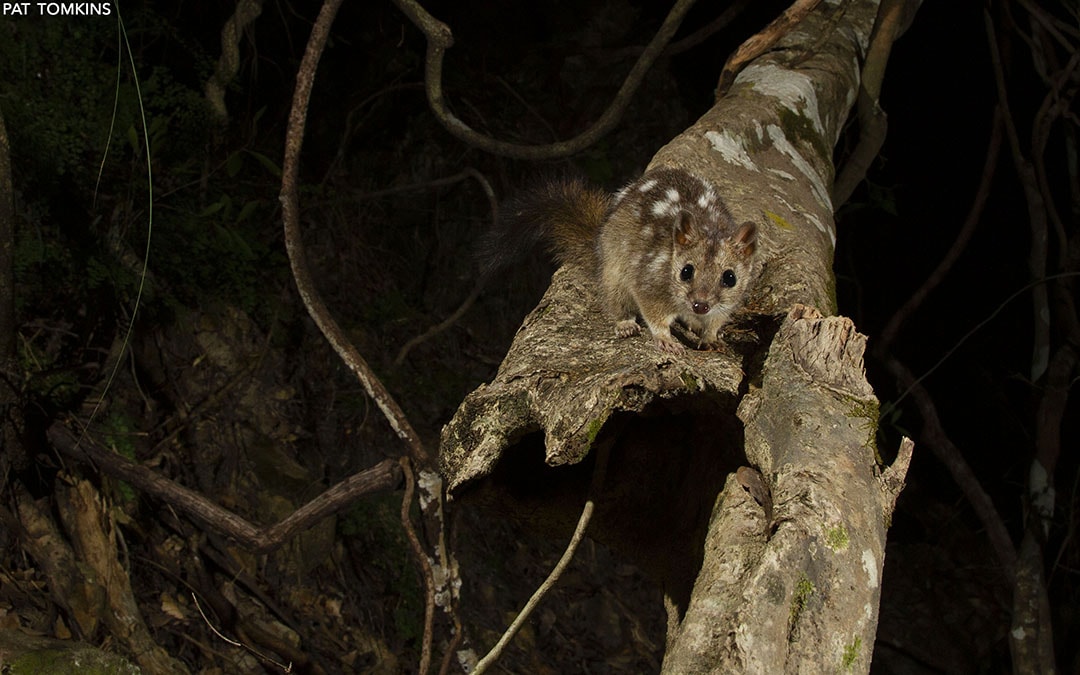
Our 5-year Northern Quoll Monitoring Program, conducted in conjunction with the Mount Emerald Wind Farm (MEWF) energy project, has successfully concluded its final round of surveys. The primary aim of this initiative was to monitor and assess the potential impacts of the wind farm development on the endangered Northern quoll. The study encompassed estimates of population size, site occupancy, individual quoll trends, and habitat assessments, and was conducted both post-construction and during ongoing wind farm operations. The results will gain insights that will guide future conservation efforts for this endangered species.


The Northern quoll, Australia’s smallest quoll, faces significant threats such as habitat loss, predation by feral cats, and cane toad poisoning, contributing to a significant decline in their distribution. Today, these nocturnal predators are present in limited localised pockets, making monitoring of existing ranges increasingly important. By comparing the Mount Emerald quoll population to control sites in the region, including Brooklyn Wildlife Sanctuary, Davies Creek, and Walsh River, the study extends beyond the impact site, yielding crucial data on the health of the Mount Emerald quoll population and its habitat whilst providing insights into multiple Atherton Tableland populations.

Quoll Habitat

Camera trap deployment

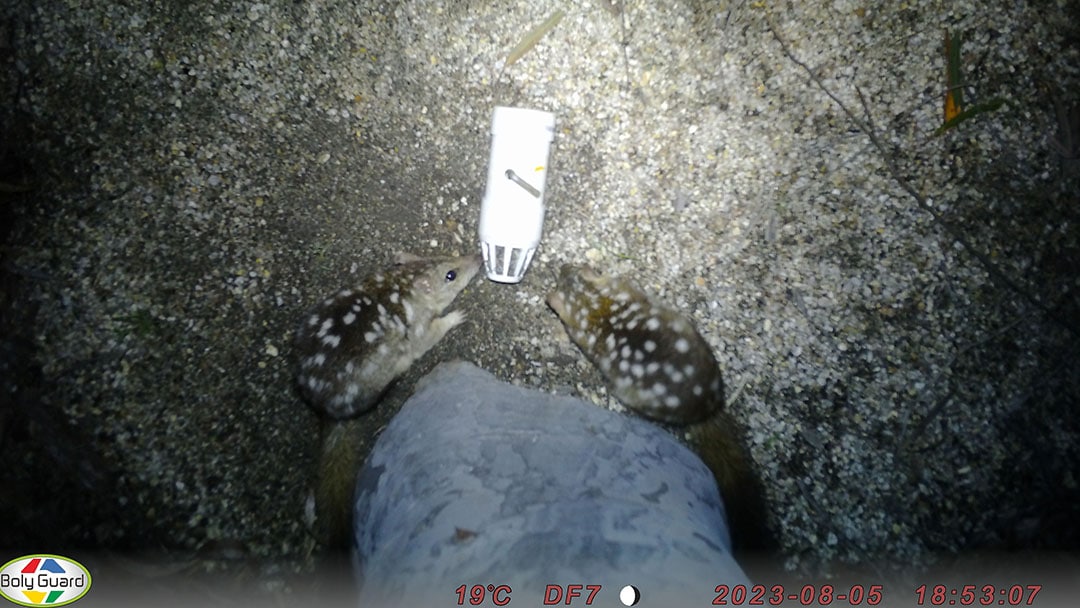
Camera trap photo allowing for spot analysis

The research methodology involved deploying camera traps arranged in a grid to estimate quoll numbers within the study area. Following each round of camera deployment, our team meticulously examined the imagery, utilising the distinctive spot patterns—akin to fingerprints—exhibited by Northern quolls for individual identification. This approach ensures accurate data collection on population size, distribution, and ecology for populations, which, in turn, contributes to well-informed management decisions and successful conservation efforts.


As we navigate the delicate balance between ecological preservation and responsible development, the insights gained from wildlife monitoring programs become the beacon guiding our commitment to a sustainable future. The final round of surveys not only marks the end of this program but also signifies the beginning of a new chapter in our ongoing efforts to protect and conserve the Northern quoll and its habitats Together, we step forward into a future where the harmonious coexistence of wildlife and renewable energy practices is not just a vision but a shared responsibility we embrace.

If you are in need of comprehensive fauna surveys, please don’t hesitate to contact us.

Nocturnal Navigators – Uncovering the Secret Lives of Bats

By Past Projects, Recent News

As nocturnal hunters, bats use sound instead of sight to catch their prey, using echolocation to detect even the smallest insect in complete darkness. Echolocation relies on clicks produced by the bat that reverberate off solid objects, working like sonar to provide spatial information about its environment. The pitch, length and shape of these clicks or “pulses” change depending on the bat’s environment and choice of prey, and most importantly, they also vary among species. This key feature has allowed ecologists at 4 Elements to record bat calls in the field, and identify their callers based on unique, species-specific features.

Many bats echolocate at frequencies beyond the capacity of human hearing, which is where bioacoustic monitoring devices (BARs) become indispensable tools in the field, as they capture ultra-sonic calls that can be analysed and visualised with bioacoustic software. Recently, 4 Elements Consulting attended an intensive workshop in Brisbane focusing on bat call identification hosted by Titley Scientific. Survey techniques, equipment and call analysis were among the topics covered, as well as a comprehensive overview of the unique calls of many of the bat species found on Australia’s east-coast.

he strikingly different call shapes of a Bare-rumped sheath-tail bat (above) and a Smaller horseshoe bat (below), visualised with bioacoustics analysis software.

For EVNT listed species like the Bare-rumped Sheath-tail bat, large-scale developments can threaten roosting habitat and disrupt foraging behaviour. Understanding the presence and distribution of at-risk species is therefore crucial for informing future environmental management decisions and the impacts of development proposals. Using bioacoustic detectors, 4 Elements recently detected the presence of Bare-rump sheath-tail bats and other EVNT listed bat species in a previously unsurveyed habitat with the use of bioacoustic detectors.

Troughton’s Sheath-tail bat

Spectacled Flying Fox

Bioacoustic surveys and analysis form one of many diverse fauna surveying techniques used at Four Elements Consulting to capture the full picture of an area’s biodiversity. Using state-of the art Anabat technology, we can better understand those elusive, nocturnal species that often go unseen to better manage environmentally responsible and sustainable developments.

4 Elements has experience in bioacoustic monitoring across a range of taxa. If you are in need of a comprehensive consultative service, please don’t hesitate to contact us.

Fauna Surveys Out West: Unveiling the Hidden Treasures

By Past Projects, Recent News

The team at 4 Elements Consulting have recently completed a recent round of general fauna surveys to the arid landscapes a few hours west of Cairns. Armed with a diverse array of survey techniques, our team embarked on a mission to unveil the rich tapestry of species inhabiting this often overlooked region. In this post, we share the fascinating discoveries from our general fauna surveys and highlight a particularly thrilling find – a thriving population of Northern greater gliders.

Diverse Survey Techniques:

Our surveys employ a comprehensive suite of techniques designed to capture the essence of an ecosystem’s biodiversity. From camera trapping and cage trapping for large terrestrial mammals to elliot trapping for small mammals, pitfall traps, and funnel traps for reptiles, frogs, and rodents, our methods leave no stone unturned. Spotlighting for nocturnal birds and arboreal mammals, active searches for diurnal reptiles, and diurnal bird surveys complete the toolkit, ensuring a holistic understanding of the fauna present.

Remarkable Discoveries:

Our team’s diligent efforts uncovered a treasure trove of unique and uncommon species within the surveyed area. Notable among the findings were the striking Red-backed kingfisher and the migratory Oriental pratincole, adding to the region’s avian diversity. The discovery of cryptic reptiles such as the Black-striped snake and Curl snake, along with elusive rodents like the Central rock rat, underscored the importance of our thorough survey approach.

Oriental pratincole

Curl Snake

The Crown Jewel: Northern Greater Gliders:

The highlight of our expedition was the identification of a healthy population of Northern greater gliders within a previously unsurveyed patch of bushland. Designated as Vulnerable under the EPBC Act, the Northern greater glider faces significant threats from climate change, including drought, bushfires, and extreme temperatures. Recognising the urgency of the situation, we plan to return to the property in the coming months to conduct targeted surveys specifically for the Northern greater gliders. This will enable us to gain a nuanced understanding of their population dynamics, facilitating informed management decisions to safeguard this vulnerable species.

Climate Change and Conservation:

The vulnerability of the Northern greater glider to climate change emphasises the broader challenges facing wildlife in the region. At 4 Elements Consulting, we recognise the need for adaptive and proactive conservation strategies. By combining our expertise with cutting-edge survey techniques, we aim to contribute to the resilience of ecosystems and their inhabitants in the face of environmental challenges.

4 Elements Consulting has experience working with a range of taxa, including several threatened species. If you are in need of a comprehensive consultative service, please don’t hesitate to contact us.

4 Elements Consulting discovers new population of endangered orchid

By Past Projects, Recent News

During recent flora surveys, 4 Elements ecologists were delighted to find a thriving population of a very special plant, the swamp orchid (Phaius australis). Swamp orchids are listed as Endangered under both federal (EPBC Act) and state legislation (NC Act) and are considered a priority species at all levels of government.

Swamp orchids are spectacular, producing the largest flower spike of any Australian orchid. Unfortunately, this makes them highly sought after by collectors, and poaching has decimated wild populations. Other threats, including habitat loss and degradation, grazing by feral species, competition with invasive plant species, and fire, have also contributed to declines in swamp orchid populations, and the species now faces an uphill battle.

Discoveries like this are rare, and protection of these populations will be crucial to the ongoing survival of this species. 4 Elements Consulting has vast experience working with threatened plant species, including propagation and revegetation of fragile ecosystems, translocation of threatened species, and ongoing management of known threatened species populations.

If you are in need of a protected plant survey (PPS), a general flora survey or simply want advice about flora on your property, please don’t hesitate to contact us.


Or see more information about Protected Plant Surveys

Environmental consultant doing bird surveys in recording several interesting species project site in Queensland.

Bird surveys out west

By Past Projects, Recent News

The team have just returned from a week of bird surveys near Undara, recording several interesting species. Most of the area surveyed is dominated by basalt soil and savannah woodland, with narrow-leafed ironbark (Eucalyptus crebra) and Molloy red box (Eucalyptus leptophleba) the dominant species. These areas were home to the usual FNQ, dry woodland species, including galahs (Eolophus roseicapilla), pale-headed rosellas (Platycercus adscitus), striated pardalotes (Pardalotus striatus), red-winged parrots (Aprosmictuserythropterus), pied bitcherbirds (Cracticus nigrogularis), Australian magpies (Gymnorhina tibicen) and noisy miners (Manorina melanocephala).

The more interesting parts of the property were on granite soils, where the spectacular Eucalpytus chartaboma was in flower, as well as several sub-canopy species including Melaleuca viridiflora and Grevillea parallella. These areas attracted a range of honeyeaters, including brown honeyeaters (Lichmera indistincta), white-throated honeyeaters (Melithreptus albogularis), noisy friarbirds (Philemon corniculatus), little friarbirds (Philemon citreogularis), scarlet honeyeaters (Myzomela sanguinolenta) and hoardes of rainbow lorikeets (Trichoglossus moluccanus). They were also home to several interesting bush species, such as the lemon-bellied flycatcher (Microeca flavigaster), brush cuckoo (Cacomantis variolosus) and grey-crowned babbler (Pomatostomus temporalis).

The ephemeral creeks were all flowing after a huge wet season, attracting large numbers of azure kingfishers (Alcedo azurea) and forest kingfishers (Todiramphus macleayii). The team were also particularly excited to see the less common red-backed kingfisher (Todiramphus pyrrhopygius) foraging in the woodland. Interesting birds in a beautiful part of the country – what more can you ask for!

If you are in need of a comprehensive consultative service, please don’t hesitate to contact us. 

Contact Us

Targeted wildlife surveys in North East Queensland

By Past Projects

The team has been on site for the past few weeks conducting targeted wildlife surveys on a previously unsurveyed cattle property. After reconnaissance missions revealed potential habitat for several vulnerable and endangered species, the team went back armed with camera traps and acoustic monitors to determine presence or absence of the endangered northern quoll, sharman’s rock wallaby and large-eared horseshoe bat, and the vulnerable bare-rumped sheath-tailed bat.

After covering a huge amount of territory on the extremely large property, camera trap images revealed a healthy population of sharman’s rock wallabies but, somewhat surprisingly, we found no evidence of northern quolls. Our acoustic recorders, however, revealed both large-eared horseshoe bats and bare-rumped sheath-tailed bats.

The team will be spending a lot of time at this property over the coming months conducting a suite of environmental surveys, including targeted and general flora, fauna and habitat surveys.

If you are in need of a comprehensive consultative service, please don’t hesitate to contact us. 

Contact Us

Water testing at Cape Flattery

By Past Projects, Recent News

4 Elements Consulting was recently contracted by Metallica Minerals to monitor water quality at a potential future silica sand mine at Cape Flattery, Cape York to establish baseline water quality. Working with traditional owners, 4 Elements Consulting assessed both water table depth and quality using samples taken from various monitoring wells located on the project site from a depth of up to 60m. Monitoring wells were purged prior to sample collection to ensure samples were representative of the aquifer. Samples were collected in NATA approved sample containers before being stored and chilled for transport. Surface water samples were also taken from gullies and creek lines across the site.

4 Elements Consulting has extensive water testing experience, with the ability to test for a range of contaminants in a variety of situations including saltwater, freshwater and estuarine environments, irrigation water, boreholes and wells, and wastewater and effluent.

If you require water testing or have any questions about water testing, please don’t hesitate to contact us.

Contact Us