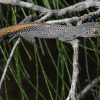
Two new distinct frog species have been identified in North Queensland. This is a remarkable feat for biodiversity and conservation research and will help accelerate efforts to protect some of our most threatened fauna in the wake of climate change. The discovery was made by James Cook University, the University of Newcastle and the South Australian Museum, and shines a light on the remarkable and unique frog species that call North Queensland home.
The discovery: whirring treefrogs unveiled
Originally thought to be one species, the whirring treefrog (Litoria revelata) is in fact three separate species, with the new research unveiling two additional species split from it; the Eungella whirring treefrog (Litoria eungellensis) and the Atherton Tablelands whirring treefrog (Litoria corbeni). A combination of genetic analysis, morphological studies and acoustic evaluations revealed that three populations of whirring treefrogs have been evolving separately for at least 1.2 million years. While the three treefrog species exhibit similar physical characteristics, including yellow-brown bodies with red patches behind their legs, geographical isolation over time has likely resulted in the genetic variation observed and the slight differences in mating calls.
- The Eungella whirring treefrog (Litoria eungellensis): This species inhabits approximately 20 km² of cool montane rainforests atop Queensland’s Eungella Range, west of Mackay, exclusively above 900 meters elevation.
- Atherton Tablelands whirring treefrog (Litoria corbeni): Found nearly 800 km away from Eungella, this species resides in the high-altitude rainforests of the beautiful Atherton Tablelands, southwest of Cairns.
- Southern whirring treefrog (Litoria revelata): This more widespread species is in New South Wales and southeastern Queensland, nearly 1,000 km away from its next-nearest cousins to the north!

Conservation implications: protecting endangered species
The discovery of these species brings to light significant conservation concerns. The Eungella and Atherton Tablelands whirring treefrogs are confined to very small habitats. These limited distributions render the species highly vulnerable to environmental change such as climate change, habitat loss, and disease spread. When a species is confined to such a small range, one catastrophic event could wipe them out entirely.
Climate change adds perhaps the most significant layer of concern for these species. With climate models predicting warmer and drier conditions, being isolated to the mountaintops of some of Queensland’s highest ranges means the “new” whirring treefrogs will essentially have nowhere to expand or migrate to as their high-altitude homes get warmer. Having such small habitat niches of cool rainforest suggests the species are already living at their altitudinal limits.
Recognising these risks, researchers advocate for immediate conservation actions, including the classification of the Atherton Tablelands species as Endangered and the Eungella species as Critically Endangered. Such listings would help facilitate the proposal and implementation of targeted conservation strategies to protect these unique amphibians, and make it harder for some detrimental processes, such as habitat clearing, to impact them
Four Elements’ role in species conservation
Environmental consultants play a pivotal role in preserving biodiversity. By conducting comprehensive environmental impact assessments and targeted species studies, we can provide essential data that inform conservation policies and land-use management. At 4 Elements, we are committed to developing and implementing strategies that balance project development needs with ecological preservation.
The identification of the Eungella and Atherton Tablelands whirring treefrogs highlights the rich, yet fragile biodiversity of North Queensland’s rainforests. Accurate species identification is crucial for effective conservation, enabling tailored strategies to protect these unique creatures. As climate change and habitat loss continue to threaten such species, proactive conservation efforts, supported by robust scientific research and environmental consulting, are essential to safeguard our biodiversity.
Do you have any questions about environmental impact assessments and targeted species studies? Contact us today.