Celebrated each year on 3 March, United Nations World Wildlife Day recognises the unique roles and contributions of wild animals and plants to people and the planet. The 2026 theme, Medicinal and Aromatic Plants: Conserving Health, Heritage and Livelihoods, highlights how biodiversity underpins not only healthy ecosystems, but also human wellbeing, cultural knowledge and economic opportunity.
We respectfully acknowledge that Aboriginal and Torres Strait Islander peoples have deep connections to country and totemic relationships with many plants and animals. Historically, biological materials and traditional knowledge were often taken without consent, causing spiritual and cultural harm. Today, laws such as the Commonwealth Environment Protection and Biodiversity Conservation Act 1999 and Queensland’s Biodiscovery Act 2004 guide responsible biodiscovery and help ensure benefits are shared with Indigenous communities. The information shared here is publicly available and intended to celebrate and respect these traditions, not to exploit.
Across Australia, native plants have long been valued for medicine, fragrance and wellbeing, and some are now contributing to modern scientific research. Below are eight native medicinal and aromatic plants that showcase why conserving our unique flora benefits both nature and people.
- Blushwood (Fontainea picrosperma)
Endemic to the rainforests of Far North Queensland, Blushwood has gained international attention due to research into its fruit-derived compound, EBC-46 (tigilanol tiglate). Clinical trials have explored its potential in treating head and neck cancers, offering hope for new therapeutic approaches. This species highlights how protecting rainforest ecosystems can directly support medical innovation.
- Silver spur-flower (Coleus argentatus)
A hardy and attractive coastal species, silver spur-flower is related to lemon balm and produces aromatic foliage that releases a fresh, uplifting scent when crushed. It is well suited to subtropical gardens and can be used to make fragrant herbal teas. As a native alternative to exotic ornamentals, it offers both ecological and sensory benefits.

Photo: Coleus argentatus – “Plectranthus argentatus photographed at the Royal Botanic Gardens Melbourne (Australia) in December” by Raffi Kojian, licensed under CC BY SA 3.0 via Wikimedia Commons
- Banana-bush (Tabernaemontana pandacaqui)
With glossy foliage and intensely fragrant white flowers, banana-bush is an excellent native alternative to exotic jasmine species. Naturally occurring along Queensland’s coast, it provides habitat value while delivering a strong, sweet perfume that rivals many introduced garden plants.
- Tea tree (Melaleuca alternifolia)
Best known for its essential oil, tea tree has broad antimicrobial properties and has been used traditionally by First Nations peoples for treating skin infections and wounds. Today, tea tree oil is widely used in topical antiseptic products and natural skincare.

Photo: Melaleuca alternifolia – “Flowers and foliage of Melaleuca alternifolia” by Geoff Derrin, licensed under CC BY SA 4.0 via Wikimedia Commons
- Soap tree (Alphitonia excelsa)
Alphitonia excelsa, usually known as red ash or soap tree, is a significant Australian Aboriginal medicinal plant, with bark, roots, and leaves used to treat skin infections, wounds, sore eyes, and muscle aches. It acts as an antiseptic, anti-inflammatory, and contains bioactive compounds like betulinic acid. The leaves produce a soapy lather, while infusions are used as a gargle for toothaches and crushed leaves treat headaches. Now, studies are working to identify the plants’ antibacterial compounds so it can hopefully be used in modern medicine.
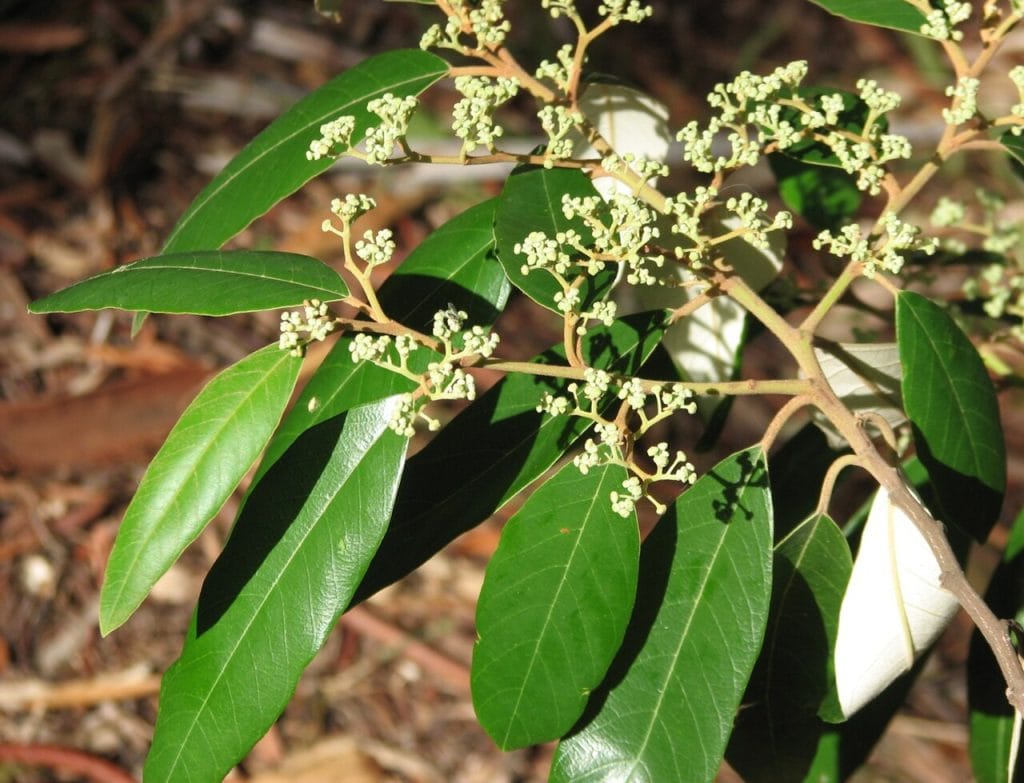
Photo: Alphitonia excelsa – “Leaves and flower buds” by Melburnian, licensed under CC BY 3.0 via Wikimedia Commons
- Lemon myrtle (Backhousia citriodora)
One of Australia’s most aromatic native plants, lemon myrtle contains high concentrations of citral, giving it an intense lemon fragrance. It is used in herbal teas, essential oils and culinary applications, and is increasingly cultivated as a native bushfood crop.

Photo: Backhousia citriodora – “Flowers” by Allthingsnative, licensed under CC BY SA 4.0 via Wikimedia Commons
- Native thyme (Prostanthera incisa)
A member of the mint family, Lamiaceae, native thyme produces strongly aromatic foliage and purple flowers. Traditionally used for respiratory ailments, it remains popular as a garden shrub and for herbal infusions.
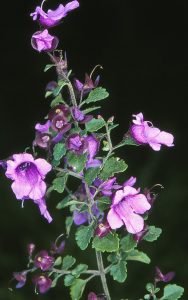
Photo: Prostanthera incisa – “Prostanthera incisa at Doctor George Mountain near Bega, New South Wales” by Betty and Don Wood, licensed under CC BY 3.0 via Wikimedia Commons
- Sandalwood (Santalum spicatum)
Valued for its fragrant heartwood and essential oil, Australian sandalwood has been used in perfumery, aromatherapy and traditional medicine. Sustainable management of this slow-growing species is critical to maintaining wild populations.
From rainforest understorey shrubs to coastal garden favourites, these plants demonstrate the intersection between biodiversity, health and sustainable land management. Protecting native vegetation is not only about conserving species – it is about safeguarding future discoveries, supporting cultural knowledge and strengthening resilient landscapes across Australia.