Category

Recent News

Bioacoustic surveys and monitoring – Powerful Data Collection For All Vocalising Species

By Recent News

Acoustic Remote Sensing of Wildlife

4 Elements Consulting provides bioacoustic surveys and monitoring of any species which vocalise in both Australia and overseas.

We provide this service to companies which require information on species which are often difficult to survey using more traditional methods. Bioacoustic sampling is often less labour intensive than traditional methods, and for many species provides much more powerful data than human searches. It is widely used for threatened species such as palm cockatoos, fig parrots, frogs and gliders and is applicable to any species which displays vocalising behaviour.

Trained in Advanced Techniques

Our two senior ecologists have undertaken extensive training in the latest capabilities of bioacoustics surveys with Mr Ted Pedersen, a leader in this field. Training encompassed acoustic recording deployment, experimental design for your target species, data processing and analysis techniques. We have successfully carried out this research now with a threatened frog, and are able to apply this method to a diversity of species.

Find out if our bioacoustic surveys and monitoring will help your project.

Enquire Now

How do these improved methods work?

Improving technologies is enabling environmental researchers and managers to utilise improved methods to detect and monitor our wildlife. One tool which is becoming increasingly more common is the use of acoustic recorders to detect species which actively vocalise. 4 Elements Consulting have ecologists trained in deployment of the most popular recorders, as well as identifying key species using acoustic remote sensing software.

This tool has been identified in a number of studies to greatly increase your chance of detecting rare species, and their deployment and analysis of acoustic data is significantly more cost effective than more traditional methods. We are able to assist with studies of key birds and frogs for our clients.

Certifications & Industry Affiliates

Why Choose 4 Elements Consulting?

We have completed training in the latest bioacoustics survey methods to provide the same high-quality data for your project, whereas, the vast majority of consultancy companies have not. Our staff have undertaken the most up to date training in equipment use, field methods and software for detection of species from recordings. We also have training in establishing automated signal detection for long term projects. Ted Pedersen (Australian expert in bioacoustics monitoring) believes that undertaking his program places his graduates in the top 2% of bioacoustic practitioners in Australia. Additionally, the method is likely to be more cost effective to the client, less intrusive and generate considerably better data than our competitors who are not utilising the most up to date technology for targeting vocalising species.

CONTACT US

Call us on 07 4050 4644 or request a call back by filling in the form below.

"*" indicates required fields
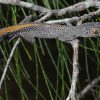
Greater Glider Fauna surveys conducted in Cairns Region

By Past Projects, Recent News
Photo: Vanessa and Chris Ryan


The greater glider Petauroides Volans is the largest of Australia’s gliding possums, living in a variety of eucalyptus forests primarily along the east coast of Australia from Mossman, Queensland down to Daylesford in Victoria. Striking in appearance, the greater glider at first glance looks like a mis-match of features. Long, hair covered ears, a short snout, a gliding membrane, finished off with a rather long fluffy tail- it would be hard to confuse this species with any other on encountering it in the wild. This gliding mammal is often referred to as the worlds ‘most clumsy possum’, honoured for its awkward gait when on the ground. Their poor mobility once on the ground makes them extremely vulnerable to predators, such as owls, dogs and cats. Greater gliders, much like koalas lead a relatively sedentary life, due to a diet of eucalyptus buds, leaves, mistletoe and flowers.

Part of the ringtail possum family, this glider is the only species which does not have a prehensile tail, and its gliding membrane attaches from the animal’s ankles to elbows. Able to glide up to 100m in a single glide, the species has an important network of trees within its home range. In areas where studied, Males and females have reasonably small home ranges, which overlap that are known to be between 1 and 11.5 ha, this usually includes approximately 20 trees which is relies on for feeding and hollows for denning. Females have single young born in May to June, and they are believed to live to approximately 15 years. This species is currently listed as Vulnerable on the IUCN red list of endangered species and recently upgraded on the Environment Protection and Biodiversity Conservation Act 1999.


Recent Fauna Surveys conducted near Ravenshoe by our environmental consultants

4Elements Consulting are undertaking a number of surveys to improve our understanding of where populations of this species occur, and their current densities near Ravenshoe in North Queensland. This was carried out by six experienced field staff, who walked in pairs at night with headlamps looking for the white eye shine of greater gliders and other nocturnal animals. Surveys were carried out on foot across 5.8 km, where 27 animals were recently recorded. These surveyed were funded by Ratch- Australia Corporation. This information will contribute to knowledge of its distribution and ecology in North Queensland, and elements of its habitat which are important for its conservation. Following surveys, the team are now planning to radio-track the population, which will provide further insight into key tree species within their range for feeding and denning which require protection, and to establish their local home ranges. The data will contribute to future management plans for protecting these populations, particularly around development works within the site in the future.

If you need environmental consulting services for your next project, contact us by clicking the button below.

Contact Us


Disclaimer: Please note that the information above is relevant to 2018, and does not account for the EPBC reclassification into three distinct species in 2022.

Fauna Surveys of the Magnificent Broodfrog in the Cairns region

By Past Projects, Recent News

The magnificent broodfrog (Pseudophryne covacevichae) is a small frog (up to 28 mm in length), which exhibits magnificent colouration – bright yellow patches on its upper forearm, and back and marbling of black and white on its stomach. Even as small tadpoles undertaking the process of metamorphosing into frogs, these distinctive yellow markings may be seen. Despite its striking markings, the species was only described by scientists as a separate species at the museum in 1994, and very little is known of its behaviour, distribution, and ecology. The magnificent broodfrog inhabits seepage areas along small streams in open eucalypt woodlands and is known from only a few populations above 800m altitude near the townships of Ravenshoe, and Herberton in North Queensland. Recently, a small population was also discovered on the Paluma range, extending its distribution 150 km.

During the wet season, frogs use grassy tussocks and leaf litter in these seepage areas to call for a mate and lay their eggs. The short ‘ark’ of the males may be heard on warm, wet nights from October to March. Females lay eggs in leaf litter or into nests made by the males, and males often tend to the eggs during this part of their life cycle. Clutches of these eggs may contain between 6 and 82 small eggs. Larvae complete the next stage of their growth in the water and need to make their way into water to complete the tadpole stage. Scientists have no information on the diet of the magnificent broodfrog, however, it is likely to consume small ground-dwelling insects.

The broodfrog is listed as Endangered on the IUCN red list of endangered species and vulnerable nationally on the Environment Protection and Biodiversity Conservation Act 1999.

Fauna Surveys/Environmental Consulting Services at High Road Wind Farm

Environmental Consultants at 4Elements Consulting have been engaged to assist with the development of the High Road wind farm near Ravenshoe in North Queensland and are undertaking a number of flora and fauna monitoring surveys to improve our understanding of where populations of this species occur.

This is done by identifying potential areas the frog may be found in eucalypt woodlands and walking through these areas in the evening playing a recording of their call, this method is called ‘call playback’. Often with calling species (also known as ‘sonorific’ species) when they hear the call often animals will ‘reply’, enabling us to identify their location. This information will contribute to knowledge of its ecology, and elements of its habitat which are important for its conservation. The data will contribute to future management plans for protecting these populations, particularly around development works within the site in the future.

If you need species management services for your next project, click the button below to contact us.

Contact Us

Mount Emerald Wind Farm Project Video

By Mount Emerald Wind Farm, Past Projects, Recent News

The Mount Emerald Wind Farm Project is due for completion in December of this year and 4 Elements Consulting has contributed to the best practice environmental management of the difficult project through our Biodiversity Program on the site. Watch our video for some highlights of this amazing story.

If you would like to contact us about your next project, click the button below.

Contact Us

Northern Quoll (Dasyurus hallucatus) den with juveniles in Far North Queensland, Australia

By Recent News

Female Northern Quoll (Dasyurus hallucatus) with her juveniles in Far North Queensland


In the above clip an obliging female Northern Quoll dubbed #35 can be seen outside one of her dens with a total of five juveniles beginning to show independence as they approach weaning age. By radio-tracking individuals the team was able to record the number and type of dens used within an accurately defined territory. This was highly useful in confidently managing risk to Northern Quolls throughout works. The team were also able to record evidence of this nocturnal species regularly sunbaking and preening with young outside of the den during daylight hours as seen here.

Northern Quoll (Dasyurus hallucatus) Release

By Recent News

Northern Quoll (Dasyurus hallucatus) Release in Far North Queensland


During construction phase on the MEWF Project, the Northern Quoll population was monitored on site. An initial intensive trapping effort allowed the team to determine the size of the population and for individual quolls to be radio-collared and subsequently tracked to their dens. This allowed the team to determine if Quolls were at risk to disturbance during works allowing works to be undertaken without impacting directly on the quoll population. Measures of success of this approach included successfully rearing of young to weaning age on the project site.

If you need an extensive fauna survey, read more here.

Mount Emerald Wind Farm

By Mount Emerald Wind Farm, Past Projects, Recent News

Client – MEWF Pty Ltd January 2017- Current

4 Elements Consulting implement the Biodiversity Management Program for the Mount Emerald Wind Farm which is building 53 turbines near Walkamin, Far North Queensland. The Northern Quoll Species Management Plan, Habitat Clearing and Management Plan, Protected Plant Management Plan and Translocation Plan are required to protect nine threatened (EVNT) species located within the vicinity of the MEWF project site.  To date a team of up to 12 biologists have been required on a daily basis to provide preclearance assessment for threatened fauna such as the Northern Quoll and translocate threatened flora from construction areas, to allow works to commence across site. Methods such as collaring and radiotracking have been used in conjunction with detection dogs to ensure that the endangered Northern Quoll is not harmed when located within work areas. The program is a highly coordinated, logistical exercise and requires strong technical and communication skills.


Tropical Water Quality Hub

By Past Projects, Recent News

4 Elements provided project management and coordination to the NESP Tropical Water Quality Hub (NESP TWQ Hub) for the Reef and Rainforest Research Centre. The National Environmental Science Program (NESP) is a six-year $142.5m research funding initiative of the Commonwealth government, with the TWQ being the largest of six and administered by the RRRC.   The aim of these projects are to provide practical solutions to improve water quality from catchment to coast along the Great Barrier Reef and Torres Strait.  Mellissa’s role was to provide co-ordination, project management, liaison and synthesis support for delivery of 28 projects.